

100 Acts of Kindness: Simple Ways to Make Someone’s Day
100 Ways to Build Connection, Community & Belonging
The Loneliness Epidemic Isn't About Being Alone
On a crowded subway in Tokyo, a young man scrolls silently through hundreds of messages. In a café in Paris, two friends sit across from one another, each absorbed by a glowing screen. In a suburban neighborhood outside Dallas, a retired teacher waves politely to a neighbor she has lived beside for fifteen years, yet cannot remember ever having invited inside. We have never been more connected by technology, and yet many of us quietly carry a feeling that is difficult to name. It is not simply sadness. It is not depression. It is not even isolation in the traditional sense. It is the subtle ache of moving through the world without feeling fully known.
Your Brain Isn't Looking for Happiness
Most of us spend our lives believing that happiness is the mind's natural destination. We assume that if we could simply remove enough stress, solve enough problems, or accomplish enough goals, happiness would eventually arrive on its own. Yet neuroscience and evolutionary psychology suggest something quite different. The human brain was never primarily designed to make us happy. It was designed to keep us alive.
Why Journaling Is Making a Comeback in a World That Never Stops Scrolling

Every few years, a trend emerges that seems to contradict the direction of modern life.
At a time when artificial intelligence can generate essays, answer questions, and create images in seconds, people are buying notebooks.
At a time when our phones can capture every thought, reminder, and memory, people are picking up pens.
The Gratitude We Realize Too Late
Father's Day has a way of making us look backward.
For many of us, it's a day filled with cards, phone calls, family gatherings, and memories. We celebrate the fathers, grandfathers, stepfathers, mentors, coaches, and father figures who helped shape our lives. We remember lessons they taught us, traditions they created, and moments we shared together.
Why More People Are Searching for Slower, More Meaningful Summer Travel

Every summer brings its own travel trends. There are always destinations that surge in popularity, flights that become difficult to book, national parks that fill with visitors, and cities that dominate social media feeds. But beneath the surface of this year’s travel searches, something more interesting appears to be happening. People are not only searching for where to go. They are searching for how they want to feel.
Why So Many Graduates Feel Anxious Instead of Excited in 2026
Graduation season is supposed to feel triumphant.
Caps fly into the air. Parents cry. Friends hug in parking lots while nostalgic songs play through portable speakers. Photos flood social media. Smiling faces. Carefully chosen senior quotes. Perfect lighting. Optimism about the future.
But underneath the surface, many graduates are carrying something else entirely.
The Small Garden Shift: Why Tiny Spaces, Florals, and Whimsy Are Changing How We Care for Ourselves

There is something quietly powerful happening this spring.
Not louder. Not bigger. Not more optimized.
Smaller.
Search behavior is telling a very specific story. People are not just looking for gardens. They are looking for “mini gardens.” They are not redesigning acres. They are searching for “tabletop herb gardens,” “container gardening,” and even something more intuitive and less controlled, the “chaos garden.”
Dialed Mood and Dialed Health
The Quiet Epidemic of Overwhelm, Stress, and Burnout
There is a pattern hiding in plain sight. Millions of people are typing the same words into search bars late at night or between meetings. “I feel overwhelmed.” “I feel stressed.” “How do I fix this.”
Search data does not just reflect curiosity. It reflects lived experience. And right now, the signal is clear. Overwhelm, stress, and burnout are not isolated problems. They are becoming the default state.
Gratitude Is Not a Consolation Prize: Why Noticing What Matters Can Change How We Live

Gratitude is often misunderstood.
Many people imagine gratitude as something we practice only when life is going well. It appears in moments of celebration, comfort, or abundance. When things feel stable, gratitude seems natural.
But when life becomes difficult, gratitude can feel almost inappropriate. In moments of stress, disappointment, or grief, the idea of gratitude may even feel dishonest.
Beyond the Mug: Why Gratitude Journals Are Becoming One of the Most Meaningful Corporate Wellness Gifts
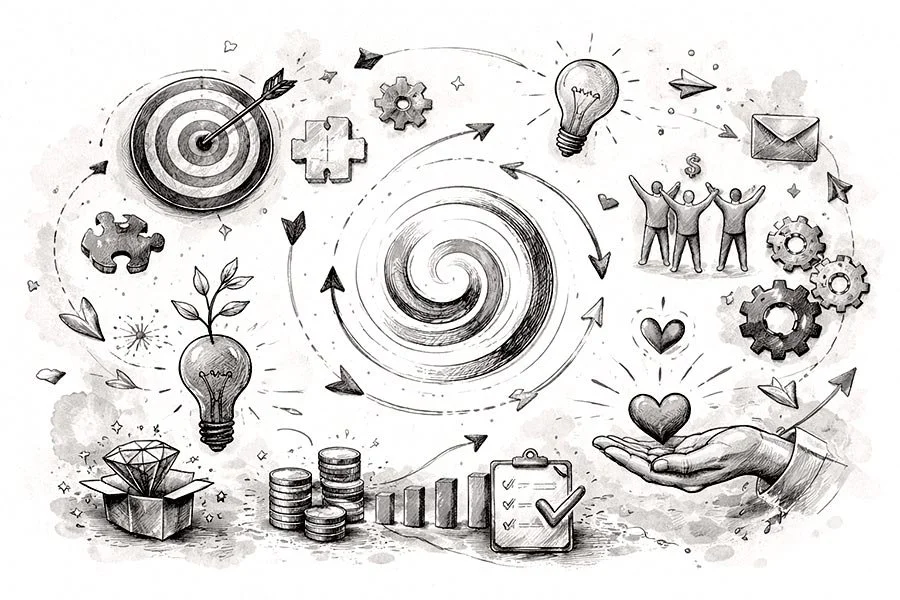
Walk into almost any office kitchen or conference swag table and you will see them. Branded mugs. Plastic water bottles. Tote bags with company logos printed across the front.
These items are usually given with good intentions. They are meant to celebrate employees, welcome new hires, or commemorate events. Yet most of them share the same quiet fate. Within a few weeks they disappear into desk drawers, cabinets, or the back of a closet.
Loneliness Is Not a Personal Failure

From Me to We: 100 Acts of Kindness That Make Doing Good Easier Than You Think
What Is a Mindfulness Practice? A Simple, Human Guide

Start the New Year With Gratitude Instead of Resolutions
What to Be Grateful For During the Cold, Dark Winter Months

Winter has a way of slowing everything down. The days get shorter. The air gets sharper. The sunlight becomes a scarce visitor rather than a daily companion. For many people, winter brings a dip in energy, mood, and motivation. This is a natural response to colder weather, reduced daylight, and the shift into a quieter season.
Seeing Through the Glass: A Brighter Look at Alcohol and the Mind

We live in a culture that salutes the glass raised, the toast made, the night that flows into dawn. Alcohol is ever-present: in celebrations, in solace, in routine. But as with many things we accept uncritically, there is a story here that needs more honesty. The story of alcohol’s impact on mental health.